


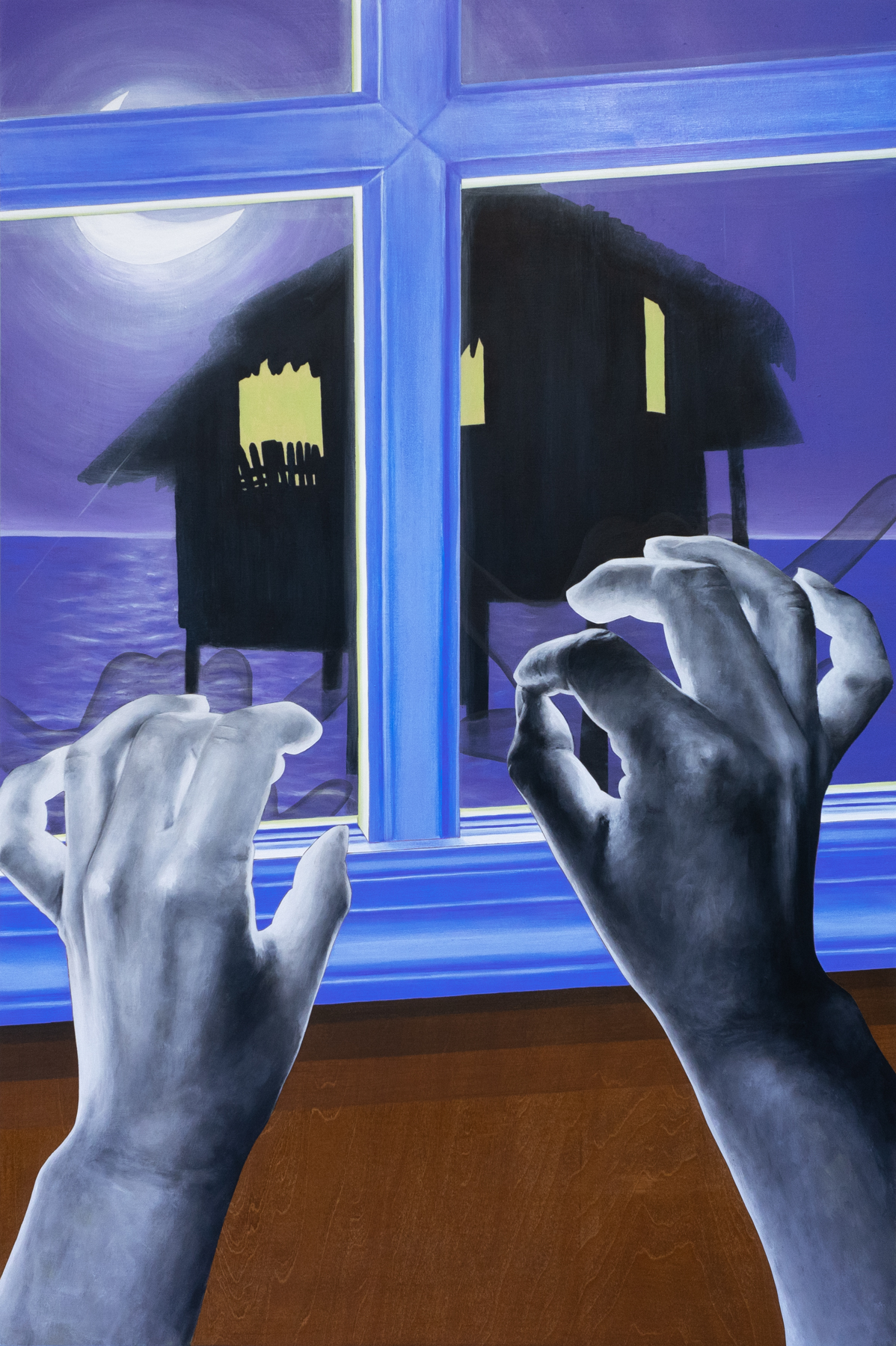


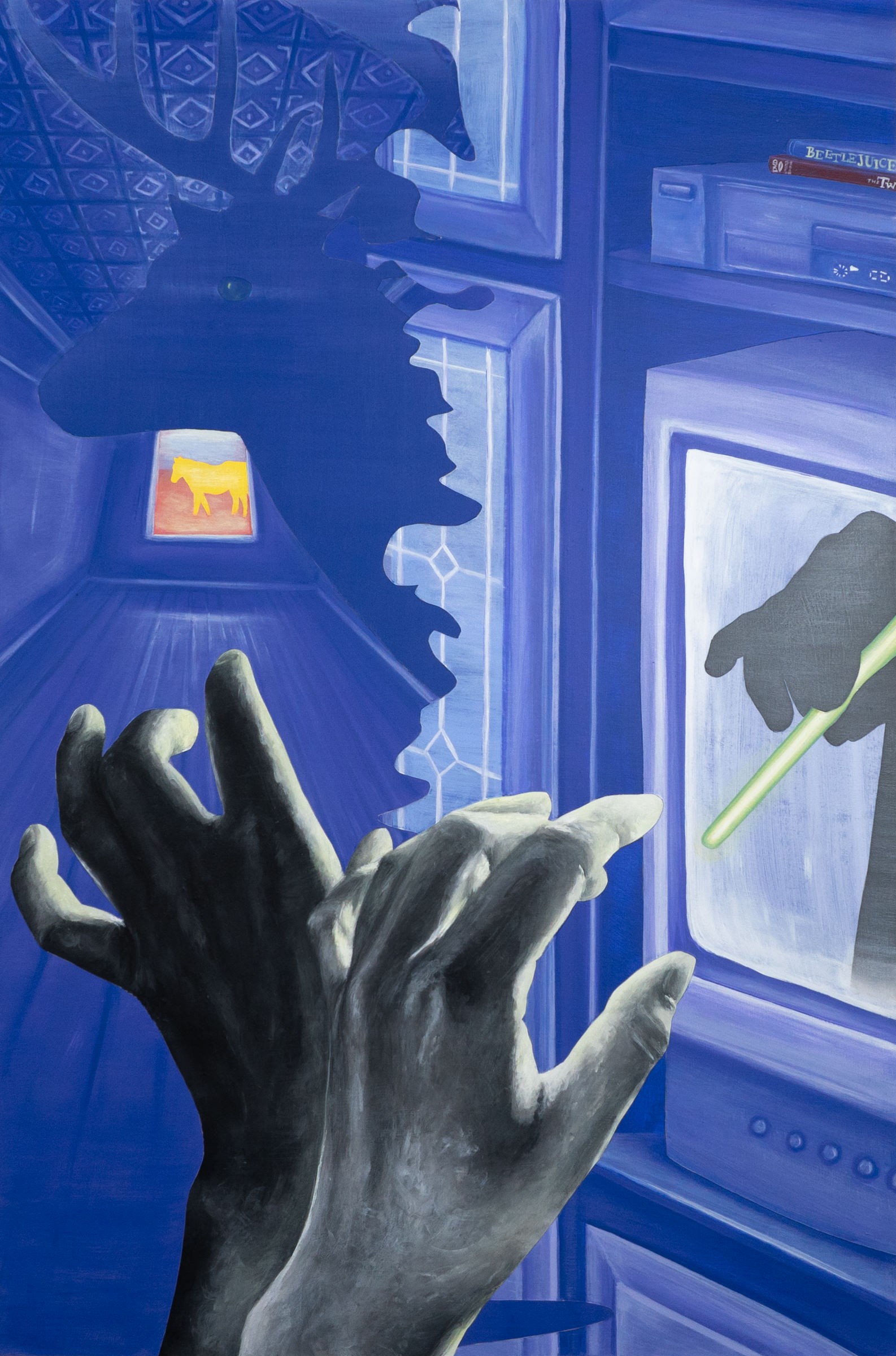
April Werle’s work features disembodied hand characters experiencing life in vibrant, colorful settings that contrast from their grayscale forms. In close proximity to these figures, viewers are invited into intimate moments that depict important nostalgic memories—scenes portraying fundamental experiences that shape the characters’ sense-of-self. Inspired by family memories and 90s-00s American Pop TV, Werle’s work references images and cultural narratives that portray a promised version of the idealized American life. Windows, mirrors, and screens are often seen in her work as reflective surfaces, as well as barriers within her narratives. Distorted space and color placement cue us into the possibility that these moments, even those depicting grief and escapism, may be romanticized. Acrylic on stained and whitewashed wood, Werle’s paintings are an exploration of memory and the evolving awareness of racial identity.

